
Efficiently report, investigate, manage and track incidents with our user-friendly EHS Incident Reporting Software and Mobile App.
- Mobile reporting ensures incidents are reported in a timely manner.
- Dashboards improve accountability and provide insight into incident trends.
- Automated reminders ensure incident reviews and corrective actions are not forgotten.
Incident Reporting Software Increases Workplace Processes By:
Efficient Incident Reporting - Empower employees to quickly and easily report safety hazards, accidents, near misses, and other incidents using our user-friendly Incident Reporting App. Capture critical details in real-time with photos, descriptions, and location data - ensuring a swift and accurate response.
Immediate Incident Notifications - Stay ahead of workplace risks with automated real-time alerts. Ecesis immediately notifies key team members when an incident occurs, ensuring timely incident investigation, effective risk management, and proactive hazard mitigation.
Improved Performance - Swift responses, thorough investigations and tracking of corrective actions reduce the potential for additional incidents. This improves performance, reduces costs, eliminates downtime and fosters a positive culture.
Centralized Incident Data - Gain real-time visibility into incident status, trends, and patterns, enabling proactive decision-making and the prevention of future incidents.
Preservation of Historical Data - Our incident reporting software preserves data in a centralized database for long-term storage and retrieval of historical information. This data proves valuable for trend analysis, benchmarking, or reference during regulatory audits or legal proceedings.
Reduced Risk - Our software's built-in incident investigation tools are used to efficiently determine root causes and assign, track and verify corrective actions. This ensures risks are quickly identified and addressed.
Lower TRIR and DART Rate - Learning about injuries and illnesses more quickly enables employers to get involved with medical care early on. This early involvement can help ensure employees receive the correct medical care while avoiding common frustrations such as clinics prescribing unnecessary medications or physical therapy.
Improved Employee Engagement - When the process for reporting incidents, near misses and unsafe conditions is simple and efficient; employees are more likely to get involved and proactively report concerns. Additionally, software provides an easy means to provide employees feedback on the corrective and preventive actions taken in response to their concerns.
Trend Identification - Standardized forms gather consistent information and improve the incident management process globally. This allows for better trending and improved visibility of areas/activities that need help/resources.
Features of Ecesis Incident Tracking Software
Simple Reporting - Easily report injuries, accidents, spills, near misses and unsafe conditions on the web or our Mobile EHS App.
Data Centralization - Collect data and attach or link files such as photos, witness statements and other required information.
Timely Notification - Quickly notify the right people via email and text messages when an incident has been reported.
Workflow Automation - Automate the incident management workflow, including tasks such as incident triage, investigation, and resolution.
Root Cause Analysis - Use built-in tools to perform root cause analyses using a variety of tools, such as the Five Why's and Fishbone methods.
Consistent Follow-Up - Generate incident- and root cause- related corrective actions and track them to completion to prevent incident recurrence.
Trending and Analysis - Analyze and trend real-time incident data (such as DART Rate) with customizable questions and built-in graphics.
OSHA Recordkeeping - Maintain compliance with OSHA recordkeeping requirements and quickly generate OSHA 300, OSHA 300A and OSHA 301 forms.
Incident Rates - Quickly determine incident rates (TRIR, DART, Injury Cost) per facility, department and/or contractor.
Comprehensive Reporting - Quickly export reports to Adobe® PDF and data to Microsoft Excel® files.
Customizable - Your company's specific reporting forms and notification requirements can be easily added to Ecesis and managed by you (versus having to pay for expensive software updates).
Cloud-Based - Access incident information from anywhere on nearly any device via our secure and trusted servers.
Easy Migration - Existing data is easily imported ensuring historical data is not lost.
Frequently Asked Questions about EHS Incidents
What Is EHS Incident Management Software?
Incident Management software is a specialized tool designed to help organizations effectively manage and track environmental, health, and safety incidents. It allows businesses to record, investigate, analyze, and report incidents, enabling them to identify trends, take preventive measures, and ensure compliance with regulatory requirements..
Why Do We Need an Incident Reporting and Investigation Program?
Great question! Please take a look at our EHS Incident Reporting and Investigation Program article.
How Can Ecesis Incident Management Software Help With Regulatory Compliance?
Ecesis incident management software supports regulatory compliance by ensuring incidents are promptly reported, properly investigated, and corrective actions are implemented. The software helps organizations document incidents, maintain an audit trail, track compliance-related actions, and generate reports for regulatory authorities. This streamlines compliance management and reduces the risk of non-compliance.
Is Ecesis Incident Management Software Customizable to My Organization's Needs?
Yes, Ecesis Incident Management software solutions offer customization options to align with specific organizational requirements. This may include configuring incident types, workflows, notification settings, data fields, and report templates. It's essential to choose a software solution that can be tailored to your organization's unique incident management processes.
When Do You Have to Report an Injury to OSHA?
A fatality must be reported to OSHA within 8 hours. An in-patient hospitalization, amputation, or eye loss must be reported to OSHA within 24 hours.
When Does OSHA Form 300A Need to Be Posted?
The Summary of Work-Related Injuries and Illnesses (OSHA Form 300A) must be posted from February 1 through April 30.
How Quickly Do I Need to Update My OSHA 300 Form?
Per 29 CFR 1904.29(b)(3), you must enter each recordable injury or illness on the OSHA 300 Log and 301 Incident Report within seven (7) calendar days of receiving information that a recordable injury or illness has occurred.
When Do Oil Spills Need to Be Reported?
The EPA requires that oil spills be immediately reported if they:
- Violate applicable water quality standards;
- Cause a film or "sheen" upon, or discoloration of the surface of the water or adjoining shorelines; or
- Cause a sludge or emulsion to be deposited beneath the surface of the water or upon adjoining shorelines.
It is important to note that many States have additional requirements for reporting oil spills.
What Are Reportable Quantities (RQ's)?
Reportable Quantities are chemical release amounts (in pounds) that trigger regulatory reporting. Under CERCLA, a hazardous substance release in an amount equal to or greater than its RQ, must be reported to federal authorities. Under EPCRA, an Extremely Hazardous Substance (EHS) release in an amount that equals or exceeds its RQ, must be reported to Federal, State, and local authorities. Many companies maintain RQ tables that identify the RQ's that would trigger reporting for each of their on-site chemicals.
Does Your Software Perform Spill Volume Calculations?
Yes. Please also check out our Free Spill Volume Calculator.
How Can Software Help?
Using an Incident Management Software solution enables incidents to be communicated and investigated more quickly and effectively so damages may be minimized and appropriate prevention steps can be taken to prevent recurrence. Our built-in incident management system also simplifies compliance with industry standards and regulatory requirements, such as:
Can you send out automated alerts to responsible persons who need to review the incident?
Yes, Ecesis will track the incident investigation and send out reminders to responsible persons who need to complete the investigation.
Do you have built in Incident Investigations to help us determine a root cause?
Yes, we have 5-Why, Fishbone built in, however we can work with you to add your company's standard investigation type.
How Much Does Incident Management Software Cost?
Please check our Pricing page, or contact us to schedule demo!
Not Your Typical EHS Incident Reporting App
The Ecesis Incident Management Software was designed by you, the end user, and is supported by a diverse team of management system experts, engineers, scientists and computer programmers with the purpose of making your life easier. This partnership ensures our EHS Software Solutions are:
Intuitive - The benefit of being designed by end users is that our software solution is intuitive and easy-to-use.
Customizable - You are in control to ensure its functionality and content meet your ever-changing needs (without expensive programming fees).
Supported by Subject Matter Experts - Our customers are supported by highly qualified industry experts who can provide advice on both software-related and regulatory question.
Comprehensive - Manage nearly all of your EHS Software needs with a single platform (versus having to maintain separate solutions for inspections, SDS & chemical inventories, training, etc.)
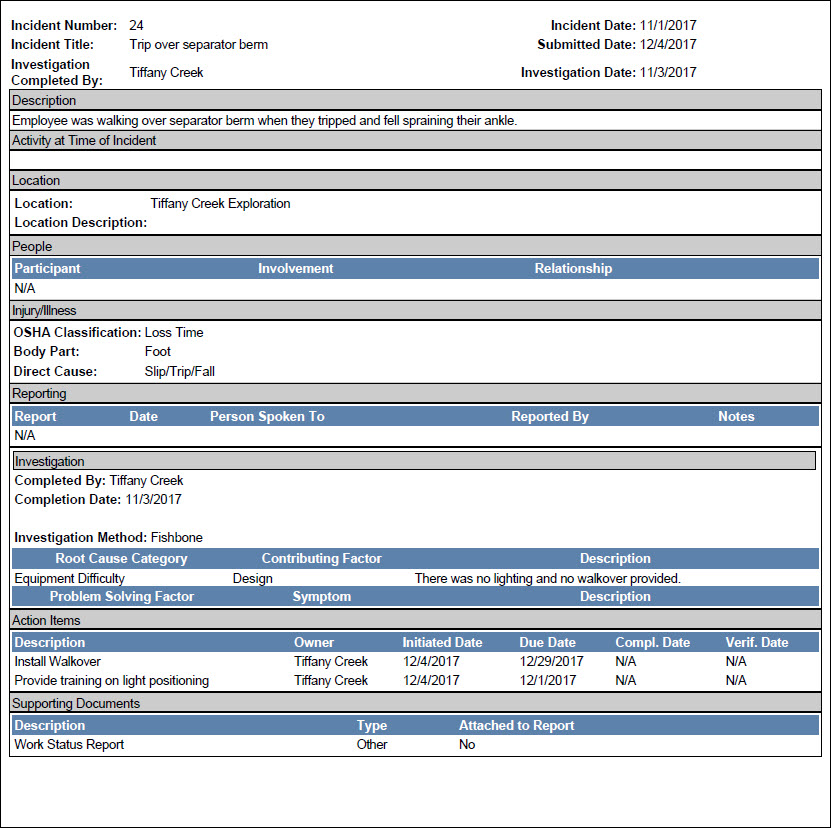
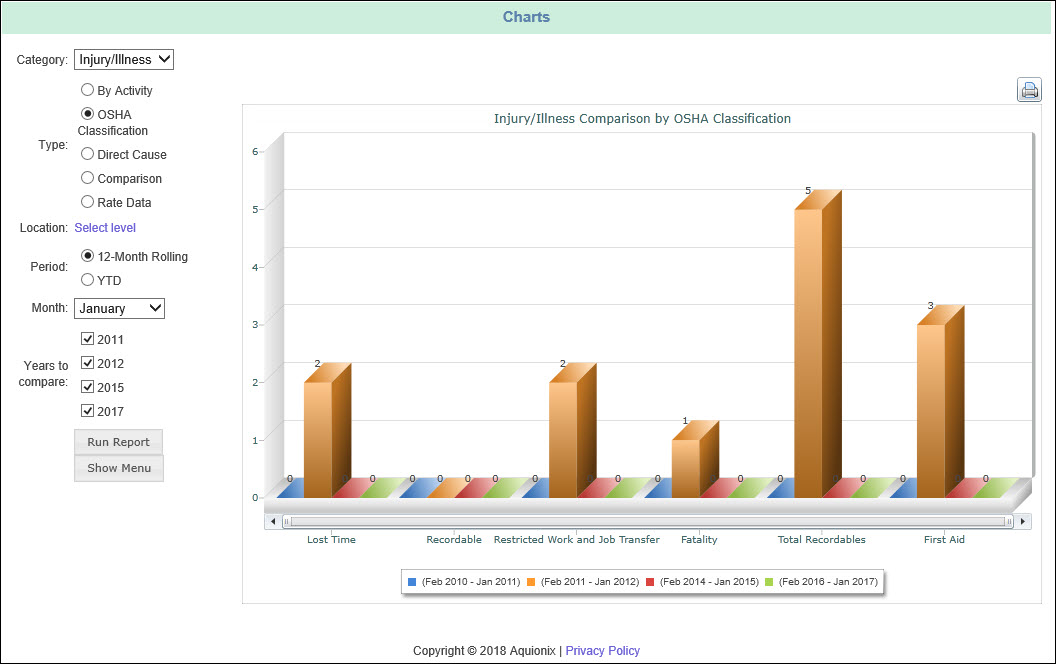
Click Image Below to See Our Safety Incident Management Software
Incident Management Resources
Educational guides, regulatory references, and free calculators to help you manage workplace incidents, reduce injury rates, and maintain compliance.
Getting Started
OSHA Recordkeeping Requirements
Complete guide to Forms 300, 300A, 301, recording criteria, posting deadlines, and electronic submission.
OSHA 300 Log Guide
Step-by-step instructions for completing Forms 300, 300A, and 301 with column-by-column guidance.
Near Miss Reporting Guide
Why near miss reporting is critical for preventing injuries and how to build a reporting culture.
Incident Reporting Best Practices
How to set up an effective reporting program with mobile tools, anonymous options, and escalation workflows.
Workplace Injury DART Rate
Understanding the DART Rate, why it matters, and proven strategies to reduce it.
Implementation & Best Practices
Root Cause Analysis Methods
5-Why, Fishbone, Fault Tree, and other RCA methods to prevent incident recurrence.
Incident Investigation Best Practices
Step-by-step guide from scene security through corrective action verification.
Effectively Managing EHS Incidents
How to create an effective EHS incident reporting and investigation program.
Advanced Topics
TRIR vs DART Rate
When to use TRIR, DART, and Severity Rate, and how they work together.
Leading vs Lagging Indicators
Understand the difference between proactive and reactive safety metrics and which to track.
Workers' Comp Cost Reduction
Proven strategies to reduce workers compensation costs through prevention and claims management.
Spill Reporting Requirements
CERCLA, EPCRA, CWA reporting triggers, reportable quantities, and notification timelines.
Reportable Quantities (RQs)
Chemical release thresholds that trigger federal and state reporting requirements.
Free Calculators & Tools
TRIR Calculator
Calculate your Total Recordable Incident Rate and compare to industry averages.
DART Rate Calculator
Calculate your Days Away, Restricted, or Transferred rate with BLS benchmarks.
Severity Rate Calculator
Measure the impact of injuries by calculating lost workdays per 100 workers.
Please call us at (720) 547-5102 or complete the form below to learn more about Ecesis can help you reduce safety incidents and improve performance.