
Fall Protection Compliance Calendar Software
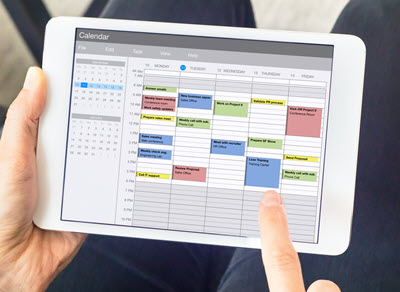
Falls are the leading cause of death in construction and a top cause of serious injury across all industries. OSHA's fall protection standards — 29 CFR 1926 Subpart M for construction and 29 CFR 1910 Subpart D for general industry — are consistently the most-cited OSHA violations year after year. Compliance requires ongoing equipment inspections, employee training, fall hazard assessments, rescue planning, and program reviews.
Our Fall Protection Compliance Calendar Software and mobile app ensures every inspection, training requirement, and program obligation is scheduled, assigned, and documented.
General Industry vs. Construction
General Industry (29 CFR 1910)
- Fall protection required at 4 feet
- Subpart D: Walking-Working Surfaces
- 1910.28: Duty to have fall protection
- 1910.29: Fall protection system criteria
- 1910.30: Training requirements
- Equipment inspection and maintenance
- Rescue planning required
Construction (29 CFR 1926)
- Fall protection required at 6 feet
- Subpart M: Fall Protection
- 1926.501: Duty to have fall protection
- 1926.502: Fall protection system criteria
- 1926.503: Training by competent person
- Written fall protection plan for certain work
- Written training certification required
Key Fall Protection Deadlines
User Equipment Inspection
Workers must visually inspect harnesses, lanyards, connectors, and anchorage points before each use for defects, damage, or deterioration.
Competent Person Equipment Inspection
A competent person must conduct a formal documented inspection of all fall protection equipment at least annually or per manufacturer recommendations.
SRL Re-Certification
Self-retracting lifelines (SRLs) must be re-certified by the manufacturer or authorized service center at intervals specified by the manufacturer.
Employee Training (Initial)
Train each employee who might be exposed to fall hazards in the nature of hazards, proper use of fall protection systems, and equipment handling.
Retraining
Retrain when workplace changes create new hazards, fall protection systems change, or when deficiencies are observed in employee knowledge or behavior.
Fall Hazard Assessment
Conduct workplace surveys to identify fall hazards and determine appropriate fall protection methods for each work area and task.
Rescue Plan Review
Review and update rescue plans to ensure prompt rescue of workers after a fall arrest event, including suspension trauma prevention.
Post-Fall Equipment Removal
Remove all fall arrest equipment from service immediately after any fall arrest event. Equipment must not be reused without manufacturer inspection and re-certification.
Guardrail & Safety Net Inspections
Inspect guardrails, handrails, safety nets, hole covers, and other passive fall protection systems for damage, displacement, or deterioration.
Anchorage Point Inspection
Inspect permanent and temporary anchorage points to verify they meet the 5,000-pound minimum strength requirement per person attached.
Equipment Inspection Schedule
Different fall protection components have different inspection intervals. Our software tracks them all:
Full Body Harnesses
Before each use + annual formal inspection. Replace per manufacturer service life.
Shock-Absorbing Lanyards
Before each use + annual inspection. Remove after any fall arrest event.
Self-Retracting Lifelines
Before each use + annual inspection + manufacturer re-certification interval.
Anchorage Connectors
Before each use + periodic formal inspection. Verify 5,000 lb capacity.
Guardrails & Handrails
Periodic inspection for damage, loosening, and compliance with height/strength requirements.
Safety Nets
Before each use + weekly inspections when in use. Replace damaged sections immediately.
Software Features for Fall Protection Compliance
Equipment Inspection Scheduling
Schedule and track pre-use, annual, and manufacturer-specified inspections for every piece of fall protection equipment.
Training Management
Track initial training, retraining, and competent person certifications for all exposed employees.
Equipment Inventory
Maintain inventory of all fall protection equipment with serial numbers, purchase dates, and manufacturer service life limits.
Hazard Assessment Tracking
Schedule and document fall hazard assessments for each work area with required protection methods.
Rescue Plan Management
Track rescue plan reviews, drill schedules, and ensure prompt rescue capability is maintained.
Post-Fall Tracking
Flag and remove equipment from service after fall events and track manufacturer inspection and replacement.
Corrective Actions
Track inspection deficiencies, equipment replacements, and hazard corrections with completion verification.
Mobile App
Conduct field inspections and document equipment condition from the jobsite with our mobile app.


